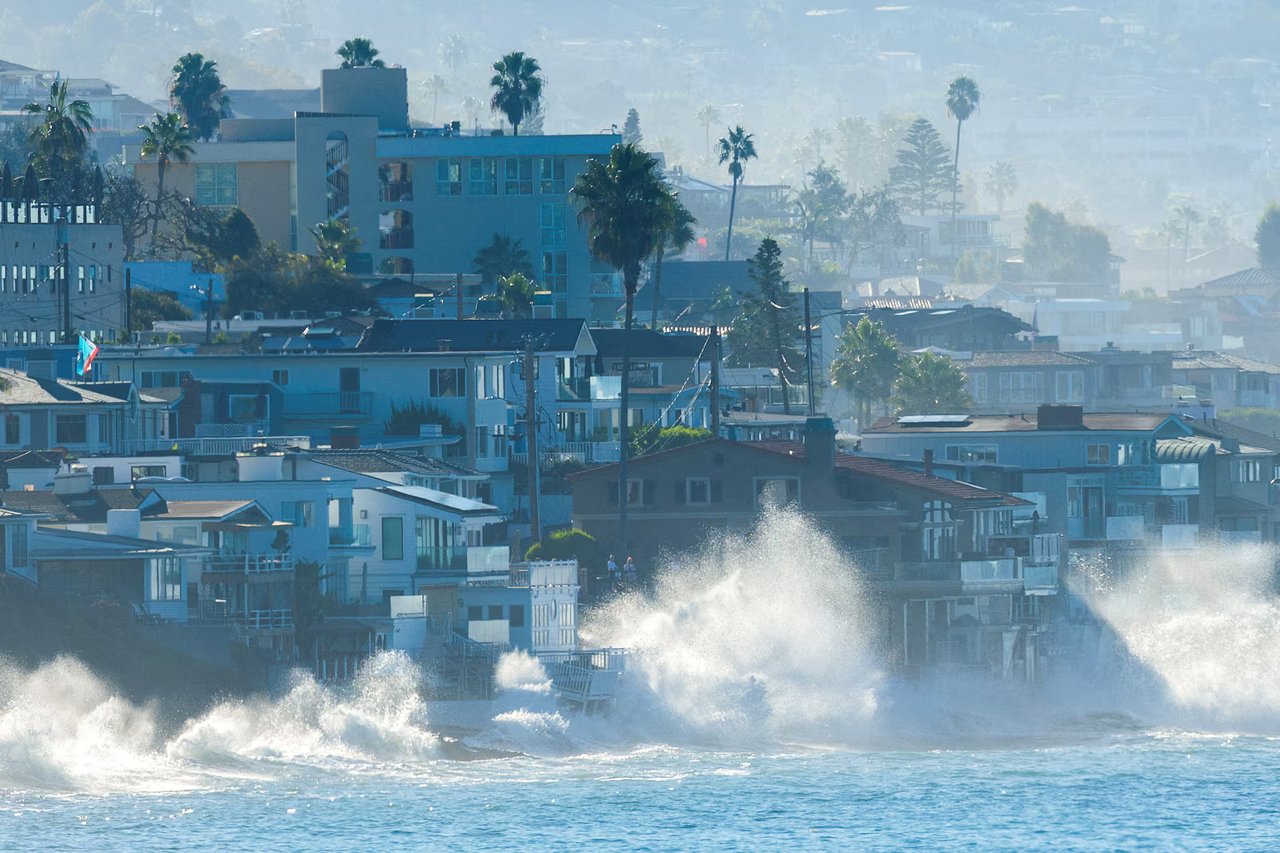
Quick answer: NOAA expects a strong to very strong El Niño this winter, which raises the odds of a wetter-than-normal season in Southern California. The steps that matter most are buying flood insurance now, since new policies generally take 30 days to start, clearing gutters and drains, fixing roof problems, protecting low openings with sandbags, and documenting your home before the first storm.
This winter's El Niño is forecast to be among the strongest on record, and the homeowners who fare best are those who act on the factors they can control before the first major storm arrives. Let's examine 6 of them: the forecast, insurance, drainage, roof and trees, low openings, and documentation.
The Forecast
The first obstacle is uncertainty. NOAA's Climate Prediction Center has an El Niño Advisory in effect, and its October 8 discussion places the chance of a strong to very strong event through early 2027 above 83%. NOAA's seasonal outlook also favors a wetter-than-average winter for California, and Governor Newsom issued a statewide emergency proclamation on September 21 to prepare for the season. A seasonal outlook cannot predict a specific storm, date, or neighborhood, and the World Meteorological Organization cautions that the strength of an event "does not translate directly into the magnitude of impacts" in any one region. It is a clear, but imprecise warning. I think homeowners should prepare for the risk rather than wait to learn the exact forecast, since the next NOAA update does not arrive until November 12.
Insurance
The second obstacle is a coverage gap. Standard homeowners, condo, and renters policies typically do not cover flood damage, and a new National Flood Insurance Program policy generally takes 30 days to take effect, counted from the day of purchase, with exceptions such as coverage a lender requires at closing. If you plan to get insurance, make sure to act now! Check your address on Cal OES's MyHazards site and FEMA's flood maps, then ask your insurance agent specifically about flood, mudflow, landslide, and drain backup, because standard policies treat each of these differently. If you start now, coverage should be in force when the rain arrives. Flood insurance cannot be bought once a storm is in the forecast after all.
Gutters, Drains, and Grading
The third obstacle is water that has nowhere to go. Clogged gutters, downspouts, and yard drains send water toward the foundation, garage, and landscaping instead of away from them. Take some time to clean out your gutters and drains, clear leaves and debris from the yard, confirm that downspouts discharge away from the house, and test yard drains with a garden hose on a dry day, when a clog is easy to find. That way, your property moves water the way it was designed to. A hose on a dry afternoon is cheaper than a plumber during a storm!
Roof and Trees
The fourth obstacle is the part of the house that is hardest to see. Small roof leaks, missing shingles, and weak or overhanging tree limbs tend to reveal themselves only when heavy rain and wind arrive. If you have an inkling that your roof is not in tip-top condition, inspect the roof now, replace missing or damaged shingles, and have a qualified professional assess any dead or questionable limbs. When the work involves a roof or electrical system, hire a licensed professional rather than climbing up yourself. Please don't climb up yourself. Please. Make sure known problems are repaired on your schedule instead of discovered on the storm's. The first major rain is a poor time to learn where the roof leaks.
Low Openings and Sandbags
The fifth obstacle is the way water enters a home. In a heavy storm, it tends to find garage doors, doorways, and other low openings first. I have some sandbags ready, and place them before the rain, not during it. OC Public Works offers free empty sandbags from October through April, and note that state guidance advises against overfilling them. Confirm the pickup location and any limits before you go.
Documentation
The sixth obstacle is proof. After a loss, owners often cannot show what their home looked like beforehand, and that complicates insurance claims and property tax relief. Make sure to have up to date photos and videos of the inside and outside of the home. List valuables, keep receipts for upgrades and maintenance, and store policies and key documents where you can reach them digitally. As I describe in my post on what to do after storm damage, a record made before a loss carries far more weight than one reconstructed after it.
What This Means in Practice
Your El Niño experience can be a sequence of small tasks or inexpensive actions when completed early. If you would like to talk through how this applies to your own home, or to a home you are considering, I am happy to help!
Quick Checklist
- Check your flood risk on MyHazards and FEMA's flood maps
- Ask your insurance agent about flood, mudflow, landslide, and drain backup, and buy flood coverage now if you need it
- Clean gutters, downspouts, and yard drains
- Inspect the roof and repair leaks or missing shingles
- Have questionable or overhanging tree limbs assessed
- Pick up free sandbags and place them at garage doors and low openings
- Photograph and video your home, and store policies and receipts digitally
Frequently Asked Questions
Does homeowners insurance cover flood damage in California? Typically not. Flood coverage is a separate policy through the National Flood Insurance Program or a private insurer, and new NFIP policies generally take 30 days to take effect.
How long does flood insurance take to start? Generally 30 days from the date of purchase, with exceptions such as coverage required by a lender when you buy a home.
Where can I get free sandbags in Orange County? OC Public Works offers free empty sandbags from October through April. Confirm the location and any limits before you go.
How strong is this year's El Niño expected to be? NOAA's Climate Prediction Center says a strong to very strong El Niño is likely through early 2027, with a high chance that it ranks among the strongest on record. A strong El Niño raises the odds of a wet winter in Southern California but does not guarantee any specific storm.
This post is general information, not insurance, legal, or engineering advice. Confirm coverage details with your insurer and have qualified professionals inspect your roof, drainage, and trees.